

types of tempered glass
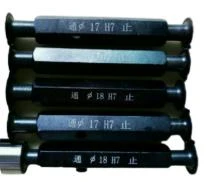
Go/No-Go Pin Gauge A Vital Tool for Quality Control In the world of manufacturing and quality control, precision is paramount. Engineers and quality assurance professionals are constantly in search of reliable methods to ensure that components meet their specified dimensions and tolerances. One of the most effective tools in this regard is the Go/No-Go pin gauge. This simple yet powerful instrument plays a crucial role in verifying the dimensional integrity of manufactured parts. Understanding Go/No-Go Pin Gauges A Go/No-Go pin gauge is a type of measuring tool used to determine if an object fits into a specified tolerance range. Essentially, it consists of two pins the Go pin and the No-Go pin. The Go pin measures the minimum acceptable dimension, while the No-Go pin measures the maximum allowable size. When a part is inserted into these pins, the outcome determines whether the part is acceptable or not. The fundamental principle behind the Go/No-Go gauge is to simplify the inspection process. Instead of relying on complex measuring instruments, operators can quickly and easily use these gauges to ensure that components meet critical specifications. This is especially important in industries such as aerospace, automotive, and electronics, where even the smallest deviation can result in significant failures. How It Works Using a Go/No-Go pin gauge is straightforward. The operator first inserts the Go pin into a hole or feature of the component being measured. If the pin fits easily and without force, the part passes the Go test, indicating that it meets the minimum requirement. Next, the operator checks the No-Go pin. If the No-Go pin fits into the same hole, the part fails the test, indicating it has exceeded the maximum allowable dimension. This binary method of measurement—pass or fail—makes Go/No-Go gauges extremely efficient. It eliminates the need for intricate calculations and reduces human error, allowing for a streamlined quality assurance process. go no go pin gauge Applications in Industry Go/No-Go pin gauges are widely used across various industries. In the automotive sector, they play a critical role in ensuring that engine parts, suspension systems, and safety features meet exacting standards. In aerospace, where safety is non-negotiable, these gauges help verify that components meet stringent regulatory requirements. Similarly, in the electronics industry, pin gauges ensure that connections and interfaces meet compatibility standards. Beyond these applications, Go/No-Go gauges are invaluable in any situation where dimensional conformity is critical. They are commonly used in machining, fabrication, and assembly processes, making them essential pieces of equipment for quality control departments. Advantages and Limitations One of the main advantages of Go/No-Go pin gauges is their simplicity. They are easy to use and require minimal training, allowing operators to quickly gain proficiency. They are also cost-effective compared to more sophisticated measuring devices. Additionally, the binary nature of the results allows manufacturers to implement quality checks swiftly without extensive data analysis. However, there are limitations to consider. Go/No-Go gauges do not provide specific measurements; they can only indicate whether parts fall within an acceptable range. Therefore, while they are excellent for basic quality checks, they may need to be used alongside more precise measuring tools for comprehensive inspection in critical applications. Conclusion In conclusion, Go/No-Go pin gauges are indispensable tools in the realm of manufacturing and quality control. They provide a practical solution for verifying dimensional accuracy, ensuring that components meet the required specifications. While they have limitations in terms of measurement precision, their ease of use and efficiency make them a staple in various industries. As manufacturing processes continue to evolve, the importance of reliable quality assurance tools like Go/No-Go pin gauges cannot be overstated. Maintaining high standards of quality not only reduces waste and rework but also ensures the safety and reliability of end products, ultimately benefiting both manufacturers and consumers alike.
about
types of tempered glass
The Importance and Applications of Small Ground Anchors In the field of civil engineering and construction, ground anchors play a pivotal role in ensuring the stability and integrity of structures. Among the various types of anchors, small ground anchors are particularly noteworthy due to their versatility and effectiveness in various applications, ranging from retaining walls to temporary structures. This article explores the significance of small ground anchors, their applications, installation methods, and advantages. What are Small Ground Anchors? Small ground anchors, also known as soil anchors or tieback anchors, are systems used to provide additional stability to structures by anchoring them into the ground. These anchors can be made from various materials, including steel or concrete, and typically consist of two main components the anchor body itself and a corresponding tensioned component, such as a cable or rod. They work by transferring loads from a structure to the surrounding soil, effectively counteracting lateral forces and enhancing overall structural support. Applications of Small Ground Anchors One of the most common applications for small ground anchors is in the stabilization of retaining walls. Retaining walls are structures designed to hold back soil and prevent erosion, and small anchors can be used to provide additional support, particularly in cases where the wall is subjected to significant lateral pressure. By anchoring the wall to the stable ground further back, the risk of wall failure can be substantially reduced. Another application of small ground anchors is in temporary structures, such as during construction or excavation projects. During these operations, various structures may need to be stabilized against gravitational and lateral forces. Temporary anchors can be quickly installed and removed, providing a cost-effective solution for maintaining safety during construction activities. Small ground anchors are also used in various recreational projects, such as securing tents or canopies in outdoor events. Their lightweight design and ease of installation make them ideal for applications requiring portability and quick deployment. Installation Methods small ground anchors The installation of small ground anchors typically involves four main steps site assessment, drilling, placing the anchor, and tensioning. 1. Site Assessment Before installation begins, a thorough site assessment is conducted to analyze soil conditions. Understanding the soil type, density, and moisture content is crucial for determining the appropriate anchor size and type. 2. Drilling Once the assessment is complete, a hole is drilled into the ground to accommodate the anchor. The depth and diameter of the hole will vary based on anchor specifications and soil conditions. 3. Placing the Anchor The anchor is placed in the drilled hole. Depending on the design, it may be connected to a tensioning device or left in place to establish load-bearing capacity. 4. Tensioning After the anchor is installed, it is tensioned to ensure optimal load transfer. This step may involve the use of hydraulic equipment to achieve the required tension levels. Advantages of Small Ground Anchors The use of small ground anchors comes with numerous advantages. Firstly, they require minimal site disruption compared to traditional foundations, making them an ideal choice for urban or sensitive environments. Additionally, their compact size allows for flexible applications in tight spaces where larger anchors would be impractical. Moreover, small ground anchors are cost-effective solutions for stabilizing structures. They can often be installed relatively quickly, reducing labor costs and downtime on projects. Their modular design means that they can be adapted to a variety of situations without needing extensive modifications. In conclusion, small ground anchors are essential components in modern construction and civil engineering. Their versatility, ease of use, and effectiveness in enhancing structural stability make them a preferred choice in a wide range of applications. Whether stabilizing retaining walls, supporting temporary structures, or securing outdoor installations, small ground anchors provide reliable and efficient solutions for ensuring safety and stability in an ever-evolving construction landscape.
-

High quality industrial productsagement

High quality industrial products
View Details -

Meet the diverse needs of customers

Meet the diverse needs of customers
View Details -

Strict quality control

Strict quality control
View Details -

Top raw materials

Top raw materials
View Details -

Trusted supplier

Trusted supplier
View Details
Our application


news and information
Versatile Clamps for 16mm Welding Tables to Enhance Your Metalworking Projects
Understanding 16mm Welding Table Clamps A Comprehensive Guide Welding is a fundamental process in me
Versatile Stainless Steel Angle Ruler for Precision Measuring and Drafting Tasks
The Versatility of the Metal Angle Ruler When it comes to precision tools in the fields of engineeri
Ustawiony wskaźnik
Zestaw wskaźników pinowych – niezastąpione narzędzie w precyzyjnym pomiarze W dzisiejszym świecie, g
 English